
10 Practical Modern Uses for Morse Code You Didn't Know About
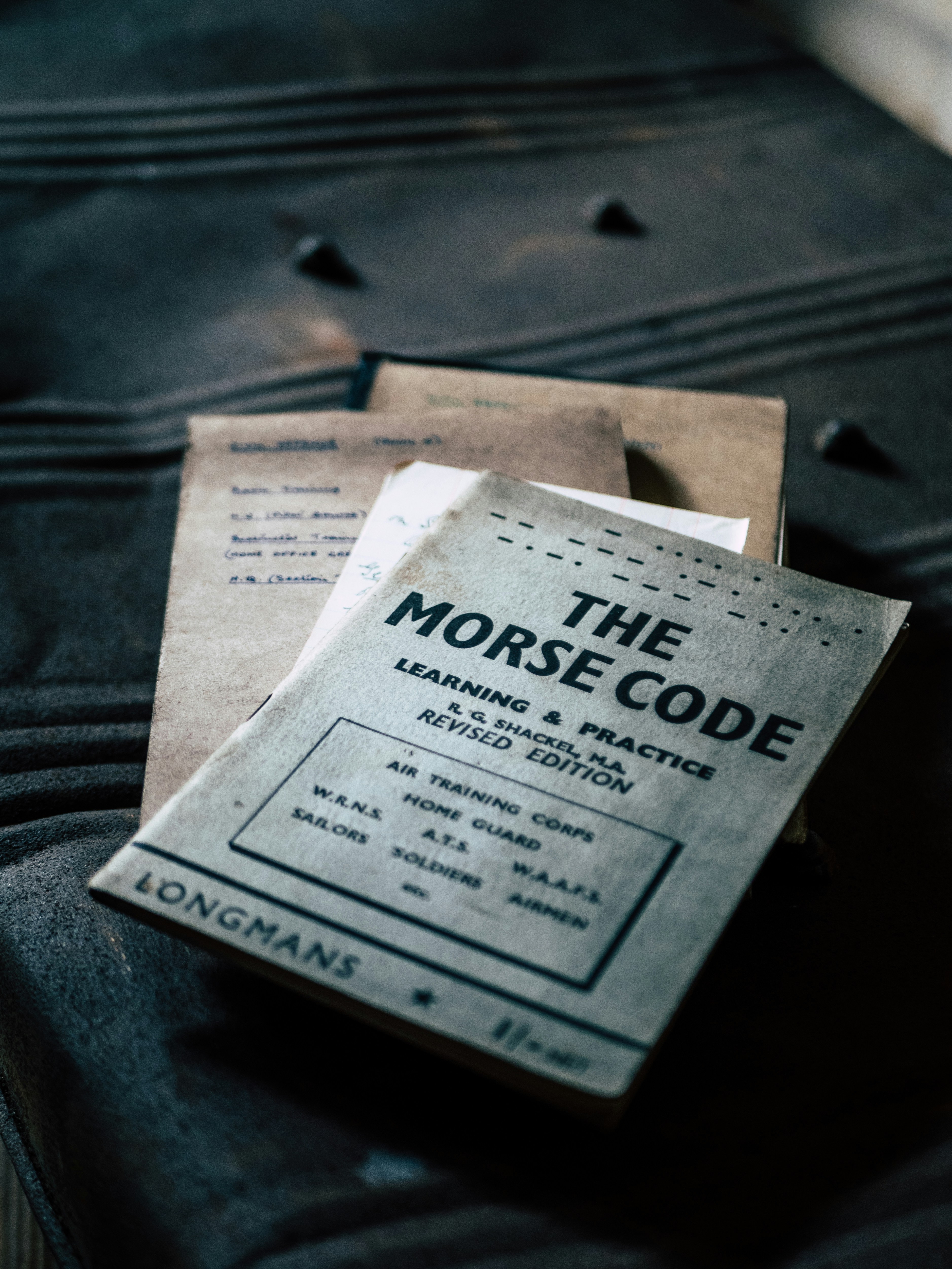
When most people think of Morse code, they picture telegraph operators from the 1800s or perhaps old war movies. But this 180-year-old communication system is far from obsolete. In fact, Morse code continues to serve vital functions across multiple industries and everyday situations in 2026. From life-saving emergency communications to cutting-edge accessibility technology, Morse code has proven its remarkable adaptability to the modern world.
Whether you're a prepper, amateur radio enthusiast, pilot, or simply curious about practical skills, understanding these modern applications might just convince you that learning Morse code is more relevant today than ever before.
1. Emergency Survival Communication
When disaster strikes and modern communication infrastructure fails, Morse code becomes a lifeline. During hurricanes, earthquakes, wildfires, or grid-down scenarios, cell towers topple, internet connections vanish, and even voice radio can become unreliable due to interference or damaged equipment.[1]
Morse code's beauty lies in its versatility. You can transmit it through:
• Flashlight signals (three short flashes, three long, three short for SOS) • Mirror reflections for ground-to-air rescue signals • Tapping on pipes or walls if trapped in rubble • Whistle blasts when visibility is zero • Radio transmissions that cut through static when voice fails
The famous SOS distress signal (··· --- ···) remains internationally recognized and can be transmitted with virtually any medium that produces distinguishable signals. Emergency management agencies and search and rescue teams still train in Morse code recognition specifically because it requires minimal equipment and works in conditions where nothing else does.[2]
If you want to practice sending SOS and other emergency signals, check out our Morse code examples page where you can see common emergency messages translated and hear them played back with audio.
2. Amateur Radio (HAM) Operations
The amateur radio community keeps Morse code thriving. Known as "CW" (Continuous Wave) in HAM circles, Morse code remains one of the most popular and effective communication modes among radio enthusiasts worldwide.[3]
Why do thousands of operators still prefer CW?
• Penetration power: Morse signals cut through atmospheric noise and interference far better than voice • Power efficiency: You can make intercontinental contacts with just 5 watts—less power than a phone charger • Bandwidth efficiency: CW occupies less spectrum space than voice or digital modes • Universal language: Operators communicate across language barriers • Contest advantages: Many radio competitions award bonus points for CW contacts
Amateur radio operators routinely achieve communication feats using Morse code that would be impossible with voice transmission at the same power levels. The global HAM community continues to preserve and advance this skill, with dedicated CW frequencies on every amateur band.
For those interested in learning Morse code to join the amateur radio community, our comprehensive guide on learning Morse code in 7 days provides a structured approach that has helped thousands of beginners master this essential skill.
3. Aviation Navigation Systems
Every time you fly commercially, you're depending on Morse code—whether you know it or not. Aviation navigation beacons, including VOR (VHF Omnidirectional Range) stations and NDB (Non-Directional Beacons), transmit their identification in Morse code.[4]
Pilots learn to recognize these three-letter Morse identifiers to verify they're tuned to the correct navigation aid. For example, if a pilot tunes to the LAX VOR (Los Angeles), they'll hear ".-.. .- -..-" (LAX) transmitted every few seconds. This provides critical confirmation that their navigation equipment is functioning correctly and locked onto the intended station.
While GPS has become primary for navigation, these Morse-coded beacons serve as essential backups. In GPS-denied environments or during system failures, these beacons continue guiding aircraft safely. Pilot training curricula worldwide still include Morse code recognition for this very reason.
If you're curious about how letters and numbers are encoded in Morse code, visit our Morse code alphabet page to see the complete reference chart and practice recognizing different character patterns.
4. Maritime Communications Backup
Although the Global Maritime Distress and Safety System (GMDSS) officially replaced Morse code for mandatory maritime communications in 1999, ships still maintain the capability as a backup system.[5] Many vessels, particularly naval ships and traditional sailing vessels, retain signal lamps that can transmit Morse code for ship-to-ship communication when radio silence is necessary or when electronic systems fail.
Modern naval vessels have even "upgraded" their Morse capabilities—computer systems now encode messages into Morse for transmission via signal lamp and automatically decode received signals, displaying them as plain text. This merger of ancient and modern technology demonstrates Morse code's enduring practicality.
Yacht owners and long-distance sailors often learn Morse code as part of their comprehensive seamanship skills, recognizing that at sea, redundancy in communication methods can mean the difference between safety and disaster.
5. Assistive Technology for Disabilities
One of Morse code's most heartwarming modern applications is helping people with severe physical disabilities communicate. For individuals with conditions like ALS, cerebral palsy, or locked-in syndrome, Morse code opens doors to communication that might otherwise be closed.[6]
How it works:
• Single-switch systems: Users operate one switch (activated by any voluntary movement—finger, eye blink, puff of breath) to input dots and dashes • Two-switch systems: One switch for dots, another for dashes • Google Gboard: Includes a Morse code keyboard designed specifically for accessibility • Specialized apps: Convert Morse input into text or speech output
This application is particularly powerful because Morse code requires only binary input (on/off, short/long), making it accessible to people with extremely limited motor control. While traditional keyboards might be impossible to use, many people can master Morse code input with just one functioning muscle.
If you're interested in trying Morse code input yourself, our free Morse code translator allows you to type text and see it instantly converted to Morse code, complete with audio playback. This can help you understand how the binary nature of dots and dashes makes it ideal for assistive technology applications.
6. Military and Tactical Operations
Military forces worldwide still train personnel in Morse code for tactical communications. In combat zones, Morse code offers several advantages:[7]
• Covert communication: Visual Morse signals (infrared lasers, filtered lights) can be seen by friendlies but not detected by enemies • Noise discipline: Communication without voice in situations requiring silence • Jam resistance: Simple on-off keying is harder to jam than complex digital signals • Low probability of intercept: Basic Morse transmissions can be harder to detect than modern digital modes
Special forces and reconnaissance units particularly value these characteristics. When operating behind enemy lines or in denied communications environments, the ability to transmit intelligence via Morse code using improvised equipment can prove invaluable.
7. Educational Tool for Cognitive Development
Educators increasingly recognize Morse code as an excellent teaching tool. Learning Morse code develops multiple cognitive skills:[8]
• Pattern recognition and memory • Auditory processing abilities • Focus and concentration • Understanding of binary systems and encoding concepts • Historical appreciation of communication evolution
Schools incorporate Morse code into STEM curricula, using it to teach concepts ranging from signal processing to the foundations of digital communication. Scout groups, youth programs, and educational camps use Morse code activities because children find the "secret code" aspect engaging while unknowingly building valuable cognitive skills.
To explore the rich history behind Morse code and understand how it evolved from Samuel Morse's personal tragedy to modern applications, read our detailed article on the complete history of Morse code.
8. Space Communications and Robotics
NASA and other space agencies have utilized Morse code in various missions. When bandwidth is extremely limited or when simple, robust communication protocols are needed, Morse code's efficiency shines.[9] Some robotic missions have incorporated Morse code elements for transmitting basic status information or commands.
The Mars rovers, for instance, have used simplified Morse-like signaling patterns as part of their communication protocols. When you need absolute reliability over vast distances with minimal power requirements, the simplicity of Morse code becomes an asset rather than a limitation.
9. Cybersecurity and Authentication
Some security applications employ Morse code or Morse-like patterns for authentication or covert signaling. In a world of sophisticated digital surveillance, a simple Morse code message transmitted via non-standard medium (like brightness variations in LED status lights or timing patterns in network packets) can serve as a covert channel or authentication method.
Cybersecurity researchers have demonstrated proof-of-concept attacks using Morse-encoded data exfiltration through various unconventional channels. While perhaps not practical for everyday use, these applications demonstrate the ongoing relevance of Morse code thinking in modern security contexts.
10. Personal Privacy and Anti-Surveillance
In our hyperconnected age where digital communications are routinely monitored and analyzed, Morse code offers a remarkably low-tech privacy solution. Because it requires no internet connection, cellular service, or computer systems that could be compromised, Morse code transmitted via light, sound, or radio provides a communication method largely outside the surveillance infrastructure.[10]
Privacy advocates and preppers include Morse code in their communication toolkits precisely because it represents a communication method that:
• Leaves no digital footprint • Requires no proprietary systems or encryption keys • Can be implemented with improvised equipment • Provides obscurity (though not true encryption) against casual observation
While Morse code alone doesn't provide cryptographic security, its use in combination with other security measures creates additional layers of communication resilience.
If you're interested in decoding Morse code from images or other visual sources, our image Morse code decoder can help you extract and translate Morse patterns from photos, making it easier to practice recognizing visual signals.
Conclusion: Timeless Relevance in a Digital World
Far from being a relic of the past, Morse code demonstrates remarkable staying power in the 21st century. Its continued use across emergency services, aviation, maritime operations, accessibility technology, amateur radio, and military applications proves that elegant, simple solutions often outlast complex ones.
The key to Morse code's longevity lies in its fundamental characteristics: it's universal, requires minimal equipment, works across multiple transmission mediums, and maintains functionality when modern systems fail. In our increasingly complex and fragile technological ecosystem, having communication methods that are robust, simple, and independent of infrastructure provides valuable redundancy.
Whether you're interested in emergency preparedness, want to join the amateur radio community, need accessible communication methods, or simply appreciate learning useful skills, Morse code offers practical value that extends far beyond historical curiosity. These ten applications represent just the beginning—creative minds continue finding new uses for this adaptable communication system.
Ready to explore Morse code yourself? Use MorseBuddy.com's free translator to start learning this valuable skill that bridges nearly two centuries of human communication innovation. With instant translation and audio playback, you can begin practicing today and discover why this timeless system remains relevant in our digital age.
References
[1] Survival Dispatch. (2021). "Morse Code Cheatsheet, Ground-to-Air and Military Handsignals." Available at https://survivaldispatch.com/morse-code-cheatsheet-ground-to-air-and-military-handsignals/
[2] ReadyWise. (2020). "Emergency Communication: Phonetic Alphabet and Morse Code." Available at https://readywise.com/blogs/readywise-blog/emergency-communication-phonetic-alphabet-and-morse-code
[3] Almond Solutions. (2025). "What Are the Modern Uses of Morse Code." Available at https://www.almondsolutions.com/blog/what-are-the-modern-uses-of-morse-code
[4] In Compliance Magazine. (2024). "Signals and Solutions: Morse Code? Really!" Available at https://incompliancemag.com/signals-and-solutions-morse-code-really/
[5] N4AE. (2017). "Ham Radio Can Bring Morse Code Back to the High Seas." Available at https://n4ae.com/2015/06/ham-radio-can-bring-morse-code-back-to-the-high-seas/
[6] Reddit /r/morse. (2016). "Modern Applications of Morse Code." Discussion thread. Available at https://www.reddit.com/r/morse/comments/53i9cj/modern_applications_of_morse_code/
[7] PreppComm. (2024). "Morse Code: What It Is & How It Is Used Today." Available at https://www.preppcomm.com/blogs/news/morse-code-what-it-is-how-it-is-used-today
[8] Morse Code Holistic. (2025). "History, Evolution, and Modern-Day Uses." Available at https://www.morsecodeholistic.com/blog/morse-code-history
[9] Planning Tank. (2023). "Using the Power of Morse Code in the Digital World." Available at https://planningtank.com/blog/using-morse-code-digital-world
[10] PUTIKEEG. (2024). "Understanding SOS Morse Code." Available at https://putikeeg.com/blogs/news/understanding-sos-morse-code
Additional Resources:
• Reddit /r/LifeProTips. (2024). "LPT: Learn SOS in Morse Code." Available at https://www.reddit.com/r/LifeProTips/comments/1blqwp3/lpt_learn_sos_in_morse_code/
• Rare FYI. (2023). "Relevance and Uses of Morse Code." Available at https://rarefyi.com/is-morse-code-still-relevant/
• MorseBuddy.com. (2026). "Free Online Morse Code Translator with Audio Playback." Available at https://morsebuddy.com/